
What Are the Best Daily Healthy Habits for a Healthier Life?
Quick Answer
The best daily healthy habits are not complicated. They include eating a balanced and varied diet, moving your body regularly, getting enough sleep, staying hydrated, managing stress, spending meaningful time with people, reducing long periods of sitting, avoiding tobacco, keeping up with preventive healthcare, and building routines you can actually maintain.
You don’t need to change your entire life overnight.
Small habits, repeated consistently, can create a much healthier lifestyle over time.
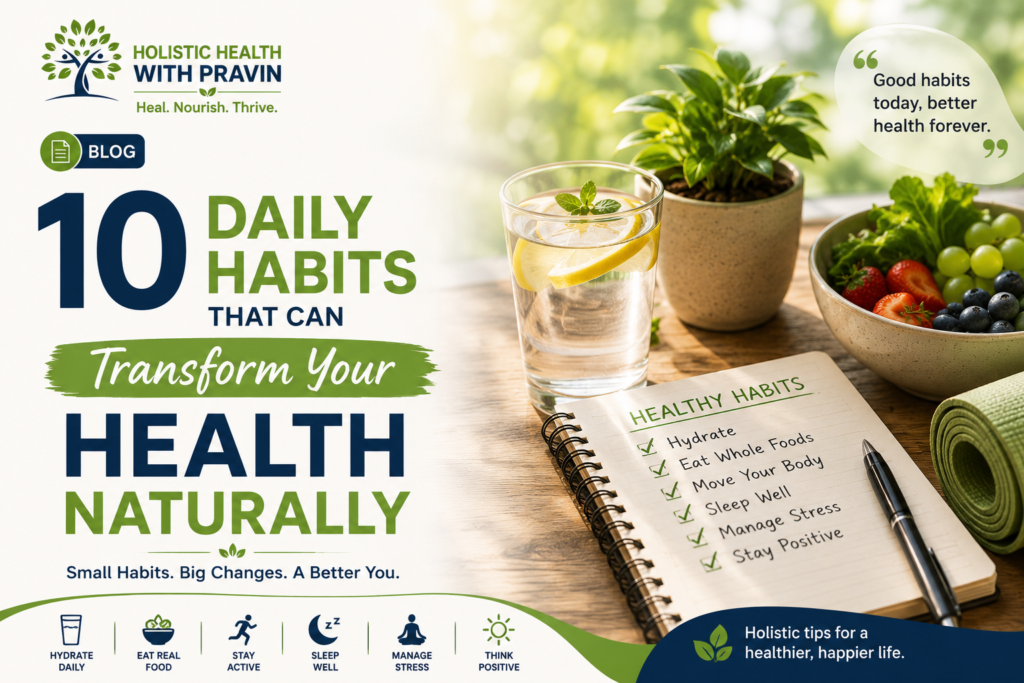
Key Takeaways
-
Your health is shaped more by your everyday habits than occasional bursts of motivation.
-
You don’t need an extreme diet or intense workout routine to start living healthier.
-
Sleep, nutrition, movement, hydration and mental well-being all work together.
-
A healthy routine should fit your real life, not someone else’s Instagram routine.
-
Start with one or two habits, make them consistent, and build from there.
-
Healthy living is about progress and balance, not perfection.
Detailed Explanation
Why Do Daily Healthy Habits Matter?
Let’s be honest.
Most of us already know what a “healthy lifestyle” is supposed to look like.
Eat better.
Exercise.
Sleep properly.
Drink water.
Reduce stress.
Spend time with family.
Sounds simple, right?
But then real life happens.
You have work.
Deadlines.
Family responsibilities.
Travel.
Social commitments.
Financial pressure.
And suddenly the perfect healthy routine you planned on Sunday disappears by Wednesday.
This is where many people get stuck.
They think being healthy requires a complete lifestyle transformation.
It doesn’t.
You don’t need to wake up at 5 AM every morning.
You don’t need to spend two hours at the gym.
You don’t need to eliminate every food you enjoy.
And you definitely don’t need to copy someone else’s routine.
A healthier lifestyle starts with something much simpler:
Doing a few good things consistently.
Your health is influenced by what you repeatedly do over weeks, months and years.
That means the small things matter.
The walk you take.
The meal you choose.
The time you go to bed.
The water you drink.
The break you take from your screen.
The conversation you have with someone you love.
These things may not feel dramatic today.
But they add up.
1. Move Your Body Every Day
Your body was made to move.
But modern life makes sitting incredibly easy.
You sit while working.
You sit during meetings.
You sit in the car.
You sit while watching Netflix.
And sometimes you even spend your evening sitting while scrolling through your phone.
Then we wonder why our body feels stiff and our energy feels low.
The good news is that movement doesn’t have to mean spending an hour in the gym.
Walking, cycling, dancing, household work, sports, stretching and structured exercise can all contribute to physical activity.
WHO recommends that adults get 150–300 minutes of moderate-intensity aerobic physical activity per week, along with muscle-strengthening activities on at least two days a week.
But don’t look at that number and think:
“If I can’t reach it, there’s no point.”
There is.
Some movement is better than none.
Try this:
-
Take a 10-minute walk.
-
Walk while talking on the phone.
-
Use the stairs when practical.
-
Stretch during long work sessions.
-
Play a sport you enjoy.
-
Add basic strength exercises to your week.
-
Take short movement breaks during desk work.
And remember:
The best exercise routine isn’t the one that looks impressive. It’s the one you can actually continue.
2. Eat More Real and Varied Foods
Healthy eating doesn’t have to mean expensive ingredients, complicated recipes or a restrictive diet.
Start with variety.
Your body needs a range of nutrients, and a varied diet can help provide them.
WHO describes a healthy diet as one that includes a variety of foods such as vegetables, fruits, legumes, whole grains or other staple foods, along with appropriate sources of protein and fats. It also recommends limiting excessive free sugars, salt, saturated fats and industrial trans fats.
Instead of asking:
“What food should I completely stop eating?”
Try asking:
“What healthy food can I add to my meals?”
For example:
-
Add vegetables to lunch.
-
Include fruit during the day.
-
Add a good protein source.
-
Choose whole grains or minimally processed carbohydrates when suitable.
-
Drink water regularly.
-
Keep highly processed foods as occasional rather than everyday staples.
You don’t need every meal to be perfect.
Your overall eating pattern matters more than one meal.
A simple rule:
Add variety before you start creating restrictions.
3. Make Sleep a Priority
Sleep is one of those things we know is important but often sacrifice first.
“I’ll sleep after finishing this.”
“One more episode.”
“Just five more minutes on Instagram.”
Then suddenly it’s 1 AM.
The next morning starts with an alarm, a tired body and a strong cup of coffee.
And the cycle continues.
Sleep isn’t wasted time.
It is part of taking care of yourself.
Poor sleep can affect your energy, mood, concentration and ability to function well during the day.
Try this:
-
Keep your sleep and wake times reasonably consistent.
-
Give yourself enough time to sleep.
-
Create a relaxing wind-down routine.
-
Reduce unnecessary screen use before bed.
-
Keep your sleeping environment comfortable.
-
Avoid making work the final thing you do every night.
Don’t turn sleep into another competition.
You don’t need the “perfect” nighttime routine.
You need a routine that gives your body enough opportunity to rest.
4. Stay Hydrated Throughout the Day
Water isn’t exciting.
There are no viral reels about drinking a glass of water.
But hydration is still one of those basic habits your body needs.
Your fluid needs can vary depending on factors such as your activity level, climate, diet, age and health.
So rather than obsessing over a universal number, develop a simple habit of drinking fluids regularly and paying attention to your body’s needs.
Make hydration easier:
-
Keep a water bottle nearby.
-
Drink water with meals.
-
Drink more during physical activity or hot weather.
-
Choose water more often instead of sugary drinks.
-
Make hydration part of your routine rather than an afterthought.
And remember:
More isn’t automatically better.
Healthy habits are about meeting your body’s needs, not turning everything into a challenge.
5. Give Your Mind a Daily Reset
Your body isn’t the only thing that gets tired.
Your mind does too.
Think about how much information you consume every day.
WhatsApp messages.
Instagram.
YouTube.
Emails.
News.
Work notifications.
Meetings.
Deadlines.
Your brain rarely gets a completely quiet moment.
That’s why a mental reset can be just as important as physical activity.
And no, you don’t need to meditate for one hour every morning.
Your reset could be five minutes.
Try:
-
Sitting quietly.
-
Taking slow breaths.
-
Journaling.
-
Reading a few pages.
-
Walking without your phone.
-
Spending time outdoors.
-
Listening to music.
-
Practicing gratitude.
-
Simply doing nothing for a few minutes.
Ask yourself:
“When was the last time today that I wasn’t consuming something?”
That question can be surprisingly powerful.
If stress, anxiety, low mood or other mental health concerns are persistent or affecting your daily life, don’t assume that another lifestyle hack will solve the problem. Speaking with a qualified mental health professional may be appropriate.
6. Spend Time With People Who Matter
This is the part of health that often gets forgotten.
We talk about food.
We talk about workouts.
We talk about supplements.
We talk about sleep.
But what about relationships?
Humans need connection.
A conversation with a friend.
Dinner with your family.
A phone call with someone you haven’t spoken to in a while.
Helping someone.
Joining a community.
These things matter.
And social health isn’t about having thousands of followers.
You can have 10,000 followers and still feel lonely.
Connection is about quality, not follower count.
Make it practical:
-
Call someone instead of only texting.
-
Eat a meal with your family.
-
Keep phones away during important conversations.
-
Make time for a friend.
-
Join an activity or community.
-
Listen without constantly checking your phone.
-
Tell people when you appreciate them.
A healthy life should have room for people.
Not just productivity.
7. Don’t Sit for Hours Without Moving
Here’s something many people miss.
You can exercise regularly and still spend most of your day sitting.
For example:
8 AM: Sit in the car.
9 AM: Sit at your desk.
11 AM: Sit in a meeting.
1 PM: Sit for lunch.
2 PM: Back to the desk.
6 PM: Sit in the car.
8 PM: Sit on the sofa.
Then you go to the gym for 45 minutes.
Exercise is great.
But your entire day still contains a lot of sitting.
That’s why movement throughout the day matters.
Try this:
Every 30–60 minutes, when practical:
Stand up.
Walk around.
Stretch.
Get some water.
Look away from the screen.
You don’t need a complicated productivity system.
Even a simple reminder can help you break up long periods of sitting.
Think beyond:
“Did I exercise today?”
Also ask:
“How much did I move today?”
8. Avoid Tobacco and Be Thoughtful About Alcohol
Some healthy habits aren’t about adding something.
They’re about reducing things that can harm your health.
Tobacco use is a major preventable health risk. Avoiding tobacco and exposure to secondhand smoke is an important part of protecting long-term health.
Alcohol deserves an equally honest conversation.
Alcohol isn’t a health product.
WHO notes that alcohol consumption is associated with a range of health risks and that reducing alcohol consumption reduces those risks.
So the practical approach is simple:
If you don’t drink, there’s no health reason to start.
If you do drink, understanding the risks and reducing consumption can be a meaningful health decision.
Don’t let the word “moderation” become an excuse to ignore the potential risks.
9. Don’t Ignore Preventive Healthcare
Healthy habits are powerful.
But they don’t replace healthcare.
One common mistake is thinking:
“I eat healthy and exercise, so I don’t need checkups.”
That’s not how prevention works.
Depending on your age, sex, family history, risk factors and local recommendations, preventive healthcare may include:
-
Health assessments.
-
Dental checkups.
-
Eye examinations.
-
Recommended vaccinations.
-
Blood pressure monitoring.
-
Appropriate screening tests.
-
Following up on persistent symptoms.
The right schedule is different for different people.
Talk with a qualified healthcare professional about what preventive care is appropriate for you.
Remember:
Prevention isn’t about assuming something is wrong.
It’s about not waiting until a small problem becomes a bigger one.
10. Build a Routine You Can Actually Maintain
This might be the most important habit on the list.
You can create the most impressive health routine in the world.
But if you can’t maintain it, it isn’t useful.
Imagine a routine that requires:
-
Two hours of exercise.
-
Perfect meal preparation.
-
One hour of meditation.
-
No screen time.
-
Waking up at 5 AM.
-
Eight hours of sleep.
-
Perfect discipline every single day.
It looks fantastic on paper.
But what happens when you have a busy workday?
Or travel?
Or a family emergency?
Or simply a bad day?
You quit.
Instead, build a minimum healthy routine.
Morning
-
Drink water.
-
Get some movement.
-
Get daylight.
-
Eat a nutritious meal if you prefer breakfast.
-
Decide your most important priorities.
During the day
-
Eat varied meals.
-
Move regularly.
-
Drink fluids.
-
Take short breaks.
-
Stay connected with people.
Evening
-
Reduce unnecessary stimulation.
-
Prepare for tomorrow.
-
Slow down.
-
Follow a consistent sleep routine.
The goal isn’t to create a perfect day.
The goal is to create a repeatable day.
Practical Action Plan: Start With Just 3 Habits
If reading all ten habits makes you think:
“Okay, that’s a lot.”
Good.
Don’t try to do all ten tomorrow.
Start with three.
Week 1: Pick Your Foundation
Choose:
1. Movement
Take a 10-minute walk every day.
2. Hydration
Keep water beside you during work.
3. Sleep
Set a consistent bedtime.
That’s enough.
Once these feel normal, add another habit.
Maybe better nutrition.
Then mental recovery.
Then social connection.
Then preventive care.
Remember:
You don’t build a healthy lifestyle in one day.
You build it one repeatable decision at a time.
Your Daily Healthy Habits Checklist
Save this as a simple reminder:
| Habit | Daily Action |
|---|---|
| 🥗 Nutrition | Eat a varied, balanced diet |
| 🚶 Movement | Walk or exercise |
| 🪑 Sitting | Take regular movement breaks |
| 💧 Hydration | Drink fluids regularly |
| 😴 Sleep | Protect your sleep routine |
| 🧠 Mental reset | Take intentional quiet time |
| ❤️ Connection | Spend meaningful time with people |
| 🚭 Tobacco | Avoid tobacco exposure |
| 🩺 Prevention | Stay up to date with appropriate care |
| 🔄 Consistency | Build habits you can maintain |
You don’t have to check every box every day.
Missing one day doesn’t mean you failed.
Just return to the habit tomorrow.
Common Mistakes When Building Healthy Habits
Mistake 1: Trying to Change Everything Overnight
Monday morning motivation can be powerful.
But it can also disappear quickly.
Don’t go from zero to ten habits overnight.
Start with one or two.
Make them normal.
Then build.
Mistake 2: Copying Someone Else’s Routine
Someone else’s 5 AM routine may work perfectly for them.
That doesn’t mean it will work for you.
Your job, family, health, finances, environment and responsibilities are different.
Build around your real life.
Mistake 3: Chasing Every Health Trend
Every week there’s a new:
“Must-have” food.
“Miracle” drink.
“Secret” morning routine.
“Best” supplement.
“30-day transformation.”
Don’t let social media decide what healthy means for you.
Look for credible evidence and advice from qualified professionals.
Mistake 4: Expecting Immediate Results
Some changes can make you feel better quickly.
Others take much longer.
Health isn’t a seven-day transformation project.
Think months and years, not just tomorrow morning.
Mistake 5: Thinking Healthy Means Perfect
A healthy lifestyle can include:
A birthday cake.
A restaurant meal.
A lazy Sunday.
A late night.
A missed workout.
One imperfect meal doesn’t define your health.
Your overall pattern matters more than one day.
Mistake 6: Turning Health Into Another Source of Stress
This is important.
If your “healthy lifestyle” makes you anxious about every meal, every calorie, every missed workout and every hour of sleep, something has gone wrong.
Health should support your life.
It shouldn’t consume it.
FAQs
What are the most important daily healthy habits?
Some of the most useful habits include regular physical activity, nutritious eating, adequate sleep, hydration, stress management, meaningful social connection, avoiding tobacco, breaking up long periods of sitting and appropriate preventive healthcare.
You don’t need to master all of them immediately.
Start with the habits that are easiest to introduce into your current lifestyle.
Can small habits really improve my health?
Yes.
Healthy behaviors can accumulate over time. You don’t need to completely transform your lifestyle in one day.
A 10-minute walk may seem insignificant.
Drinking more water may seem insignificant.
Going to bed a little earlier may seem insignificant.
But repeated consistently, small actions become part of your lifestyle.
Do I need to exercise every day?
Not necessarily.
Health recommendations focus on regular physical activity across the week rather than requiring intense exercise every single day. WHO recommends adults get 150–300 minutes of moderate-intensity aerobic activity per week, along with muscle-strengthening activities on at least two days a week.
What is the easiest healthy habit to start?
Start with something that requires very little effort.
For example:
Take a daily walk.
Drink water regularly.
Go to bed at a consistent time.
Add one more serving of vegetables or fruit to your meals.
The easiest habit to maintain is often the best place to begin.
How long does it take to build a healthy habit?
There isn’t one universal number of days.
Habit formation depends on the behavior, your environment, how often you repeat it and how easy the behavior is to perform.
Instead of asking:
“How many days until this becomes automatic?”
Ask:
“How can I make this easier to repeat tomorrow?”
Can healthy habits replace medical treatment?
No.
Healthy lifestyle habits can support overall health, but they shouldn’t replace appropriate medical diagnosis or treatment.
If you have persistent symptoms, a medical condition or a specific health concern, speak with a qualified healthcare professional.
When Should You Consult a Professional?
Healthy habits are an important foundation.
But sometimes you need more than lifestyle changes.
Consider speaking with a qualified healthcare professional if you:
-
Have persistent or unexplained symptoms.
-
Experience ongoing fatigue or significant changes in energy.
-
Have persistent pain.
-
Notice unexplained changes in weight.
-
Experience ongoing sleep problems.
-
Have concerns about your mental health.
-
Have a known medical condition.
-
Are unsure which preventive screenings or vaccinations are appropriate for you.
Don’t use a blog article to self-diagnose.
Use reliable health information to become more informed, then work with an appropriate professional when you need personalized advice.
The Bigger Picture: Your Health Is a System
Here’s the biggest lesson.
Don’t become obsessed with one habit while ignoring everything else.
You can eat extremely well but sleep five hours.
You can exercise every day but remain constantly stressed.
You can have a perfect morning routine but spend the rest of the day sitting.
You can focus on physical health while completely ignoring relationships.
That’s not holistic health.
Your health is connected.
Nutrition supports your body.
Movement supports physical function.
Sleep supports recovery.
Mental breaks support your mind.
Relationships support connection.
Preventive care helps you stay aware of potential health concerns.
The goal isn’t to become perfect in one area.
The goal is to create a lifestyle where the important pieces support each other.
Sources
-
World Health Organization, Guidelines on Physical Activity and Sedentary Behaviour.
-
World Health Organization, information on healthy diets and nutrition.
-
Centers for Disease Control and Prevention, guidance on sleep and healthy lifestyle.
-
World Health Organization, information on alcohol and health.
-
Relevant national and local preventive healthcare recommendations should be discussed with a qualified healthcare professional.
About the Author
Pravin Patil
Pravin Patil is the creator of Holistic Health by Pravin, a platform focused on helping people build a more balanced and sustainable lifestyle.
His approach to holistic health goes beyond physical fitness.
It looks at four interconnected areas:
Physical Health | Mental Health | Social Health | Financial Health
Through practical, educational content, Pravin aims to help people understand everyday health decisions and build habits that fit real life.
Because health isn’t about doing everything perfectly.
It’s about becoming a little better, consistently.
The Daily Energy Checklist Explained: Why Most People Feel Tired by 3PM
Ready to Build a Healthier Routine?
Don’t wait for Monday.
Don’t wait for the perfect diet.
Don’t wait for a new year.
Pick one habit from this article and start today.
Take the walk.
Drink the water.
Go to bed a little earlier.
Call someone you care about.
Take five minutes away from your screen.
Then do it again tomorrow.
Small habits become routines.
Routines shape your lifestyle.
And your lifestyle shapes your health.
If you want practical, realistic guidance for building a more balanced life, explore more articles from Holistic Health by Pravin covering energy, nutrition, mindset, wellness, daily habits and financial health.