
Nutrition: The Beginner’s Guide to Balanced Nutrition
Quick Answer
Balanced nutrition means eating a variety of foods in the right proportions — carbohydrates, protein, healthy fats, vitamins, minerals, and water — so your body has everything it needs to function, recover, and stay energized. It isn’t about strict dieting or cutting out food groups; it’s about consistency, variety, and portion awareness.
Why Nutrition Confuses So Many Beginners
Walk into any bookstore or scroll through social media for five minutes, and you’ll find a dozen conflicting opinions on what counts as “healthy eating.” Cut carbs. No, cut fat. Eat six small meals. No, only eat twice a day. Avoid gluten. Avoid sugar. Avoid everything, apparently.
It’s no wonder so many people feel stuck before they even start.
Here’s the good news: balanced nutrition is far simpler than the internet makes it look. You don’t need to memorize calorie counts, follow a rigid meal plan, or eliminate entire food groups. You need a working understanding of what your body actually requires — and a handful of habits you can realistically keep up for years, not weeks.
This guide breaks nutrition down into plain, practical terms, so you can build eating habits that support your energy, your health, and your goals without turning food into a source of stress.
In this guide, you’ll learn:
- What balanced nutrition actually means
- The role of macronutrients and micronutrients, explained simply
- A beginner-friendly approach to portion control
- Why hydration matters more than most people think
- Common nutrition mistakes and myths
- Answers to the questions beginners ask most
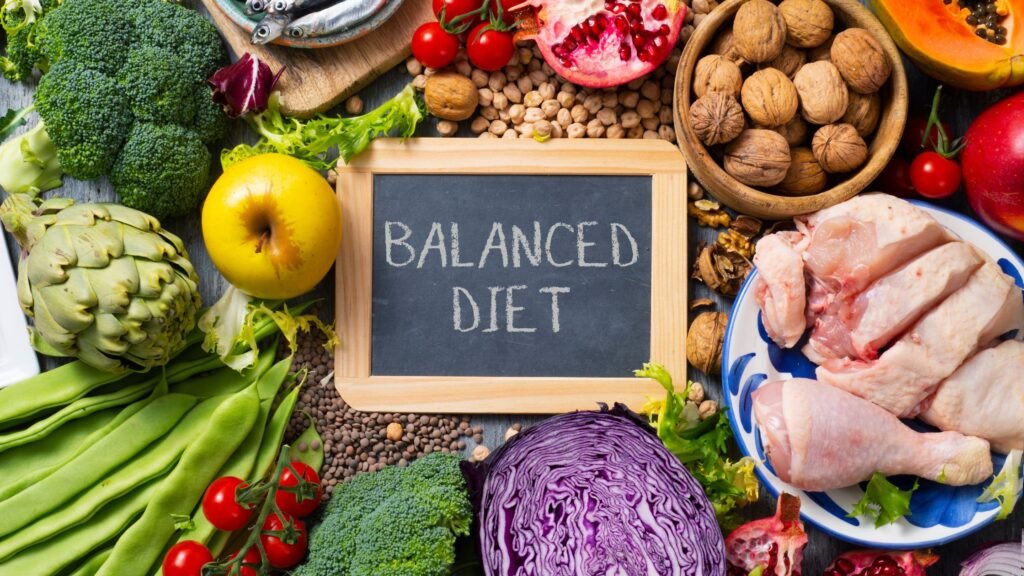
What Is Balanced Nutrition, Really?
Balanced nutrition is the practice of giving your body a variety of nutrients, in reasonable proportions, on a consistent basis. It’s less about any single meal being “perfect” and more about the overall pattern of what you eat over days and weeks.
Think of your body as a well-run household. It needs energy to keep the lights on (calories), raw materials to build and repair things (protein), backup fuel reserves (fat), quick-access power (carbohydrates), and a long list of smaller supplies that keep every system running smoothly (vitamins and minerals). Miss too many of these for too long, and things start to break down — low energy, poor concentration, slower recovery, weakened immunity.
The goal of balanced nutrition isn’t restriction. It’s making sure your plate, most of the time, covers these bases.
The Building Blocks: Macronutrients Explained
Macronutrients are the nutrients your body needs in large amounts — carbohydrates, protein, and fat. Each plays a distinct role, and none of them deserve the “bad guy” reputation they often get in fad diets.
Carbohydrates: Your Body’s Primary Fuel
Carbohydrates get broken down into glucose, which powers your brain, muscles, and nervous system. Not all carbs are equal, though.
- Whole, unprocessed carbs — vegetables, fruits, whole grains, legumes — come packaged with fiber, vitamins, and minerals, and digest more slowly, keeping energy steady.
- Refined carbs — white bread, sugary snacks, sodas — digest quickly, spike blood sugar, and offer little nutritional value beyond calories.
The goal isn’t to fear carbs; it’s to favor the whole, fiber-rich versions most of the time.
Protein: The Body’s Repair Crew
Protein builds and repairs muscle, skin, hair, enzymes, and hormones. It also keeps you fuller for longer, which makes portion control noticeably easier.
Good sources include eggs, poultry, fish, dairy, legumes, tofu, and paneer. Beginners don’t need to obsess over exact gram targets — a rough rule of thumb is to include a protein source at every meal.
Fats: Often Misunderstood, Rarely Optional
Fat has been unfairly demonized for decades, but it’s essential — it supports hormone production, protects organs, and helps your body absorb certain vitamins.
- Healthy fats — nuts, seeds, olive oil, ghee in moderation, avocados, fatty fish — support long-term health.
- Trans fats and heavily processed oils — found in many packaged and fried foods — are the ones worth minimizing.
Cutting fat entirely doesn’t make a diet healthier; it usually just makes food less satisfying and harder to stick with.
The Small Stuff That Makes a Big Difference: Micronutrients
Vitamins and minerals don’t provide calories, but they’re essential for nearly every process in your body — from immune function to bone strength to how well your cells produce energy.
Rather than tracking every vitamin individually, the simplest strategy for beginners is eating a wide variety of colorful, whole foods. Different colors in fruits and vegetables generally signal different nutrient profiles — so a plate with several colors on it is usually doing more nutritional work than a plate of just one or two.
Portion Control Without Obsessive Calorie Counting
You don’t need an app or a food scale to eat balanced meals. A simple visual method works well for most beginners:
- Half your plate — vegetables and fruits
- A quarter of your plate — protein (dal, eggs, chicken, fish, paneer, tofu)
- A quarter of your plate — whole grains or starchy carbs (rice, roti, oats, sweet potato)
- A thumb-sized portion — healthy fats (ghee, oil, nuts)
This “plate method” naturally builds balance into every meal without requiring math.
Hydration: The Most Overlooked Nutrition Habit
Water doesn’t get nearly enough credit in nutrition conversations. It regulates body temperature, supports digestion, keeps joints lubricated, and helps your body transport nutrients where they’re needed.
Mild dehydration is often mistaken for hunger or fatigue — so before reaching for a snack or wondering why you feel sluggish mid-afternoon, a glass of water is worth trying first. A practical starting habit: drink a glass of water first thing in the morning, and keep a bottle within reach throughout the day.
Common Nutrition Mistakes Beginners Make
- Skipping meals to “save calories.” This often backfires, leading to overeating later and unstable energy throughout the day.
- Cutting out entire food groups without reason. Unless there’s a medical reason, eliminating carbs or fats entirely usually isn’t necessary — and rarely sustainable.
- Chasing perfection. One indulgent meal doesn’t undo a week of good habits, and treating it that way often leads to giving up altogether.
- Ignoring portion sizes on “healthy” foods. Nuts, oils, and even whole grains are nutritious, but still calorie-dense — moderation still matters.
- Not planning ahead. Skipping meal prep often means defaulting to whatever’s fastest and least nutritious when hunger hits.
Common Nutrition Myths
Myth: Carbs make you gain weight.
Weight gain comes from consistently eating more calories than your body uses, not from any single macronutrient. Carbohydrates are a normal, necessary part of a balanced diet.
Myth: You need to eat every two hours to “boost metabolism.”
Meal frequency has far less impact on metabolism than total daily intake and food quality. Eating three balanced meals works perfectly well for most people.
Myth: All fat is bad for you.
Healthy fats are essential for hormone health and nutrient absorption. It’s processed and trans fats that deserve caution, not fat as a category.
Myth: Supplements can replace real food.
Supplements can fill specific gaps, but they can’t replicate the full range of nutrients, fiber, and compounds found in whole foods.
Frequently Asked Questions
What does balanced nutrition mean for a beginner?
It means regularly eating a variety of whole foods that cover carbohydrates, protein, healthy fats, vitamins, and minerals, in reasonable portions — without needing to track every calorie or eliminate entire food groups.
How much protein should a beginner eat?
There’s no single number that fits everyone, but a simple starting habit is including a protein source — eggs, dal, paneer, chicken, fish, or tofu — at every meal.
Is it necessary to count calories to eat healthy?
No. Many people build lasting healthy habits using visual tools like the plate method instead of calorie counting, especially when just getting started.
How can I start eating healthier without a strict diet?
Begin with small, sustainable changes — add a vegetable to each meal, drink more water, choose whole grains over refined ones, and include a protein source at every meal.
Are cheat meals bad for progress?
No. Occasional indulgent meals are a normal part of a sustainable eating pattern. What matters most is the overall consistency of your habits over weeks and months, not any single meal.
Key Takeaways
- Balanced nutrition covers carbohydrates, protein, fats, vitamins, minerals, and water — not just calorie counts.
- The plate method is a simple, beginner-friendly way to build balanced meals without tracking apps.
- Whole, minimally processed foods generally offer more nutritional value than refined or packaged alternatives.
- Hydration plays a bigger role in energy and hunger than most people realize.
- Consistency over time matters far more than any single “perfect” or “imperfect” meal.
Final Thoughts
Nutrition doesn’t have to be complicated, and it definitely doesn’t have to be stressful. You don’t need to eliminate your favorite foods or follow someone else’s rigid meal plan to eat well — you just need a working understanding of the basics and a handful of habits you can stick with long-term.
Start small: add more vegetables, drink more water, choose whole foods more often than not. Build from there.
At Holistic Health with Pravin, the goal is always the same — practical, evidence-informed guidance that helps you build habits that actually last, not just another diet you’ll abandon in a month.