
Why Preventive Health Checkups Matter Even When You Feel Healthy
Many people visit a doctor only when they experience pain, discomfort or other noticeable symptoms. If they feel energetic, sleep reasonably well and continue their daily activities without difficulty, they may assume that their health is perfectly fine.
But feeling healthy and having no symptoms do not always mean that every health risk is absent.
Some health conditions, including high blood pressure and certain metabolic disorders, can develop without obvious early symptoms. Appropriate preventive screening can help identify selected risks before they become more difficult to manage. However, not every person needs every available medical test, and more testing does not automatically mean better healthcare.
This is where preventive health checkups become important.
Preventive healthcare involves taking appropriate steps to maintain health, identify certain risks and detect selected conditions early enough for timely evaluation or treatment. It includes more than laboratory tests: conversations with a healthcare professional, vaccination reviews, lifestyle guidance, age-appropriate screening and follow-up care can all play a role.
For busy professionals, entrepreneurs and families, preventive care is an opportunity to make informed decisions about health before a problem disrupts everyday life.
At Holistic Health with Pravin, we believe that health is not simply the absence of illness. It also involves awareness, sustainable habits and taking responsible steps to protect your physical and mental well-being.
In this guide, you will learn why preventive health checkups matter, which factors influence the screenings you may need, how to prepare for a medical appointment and how to avoid unnecessary testing.
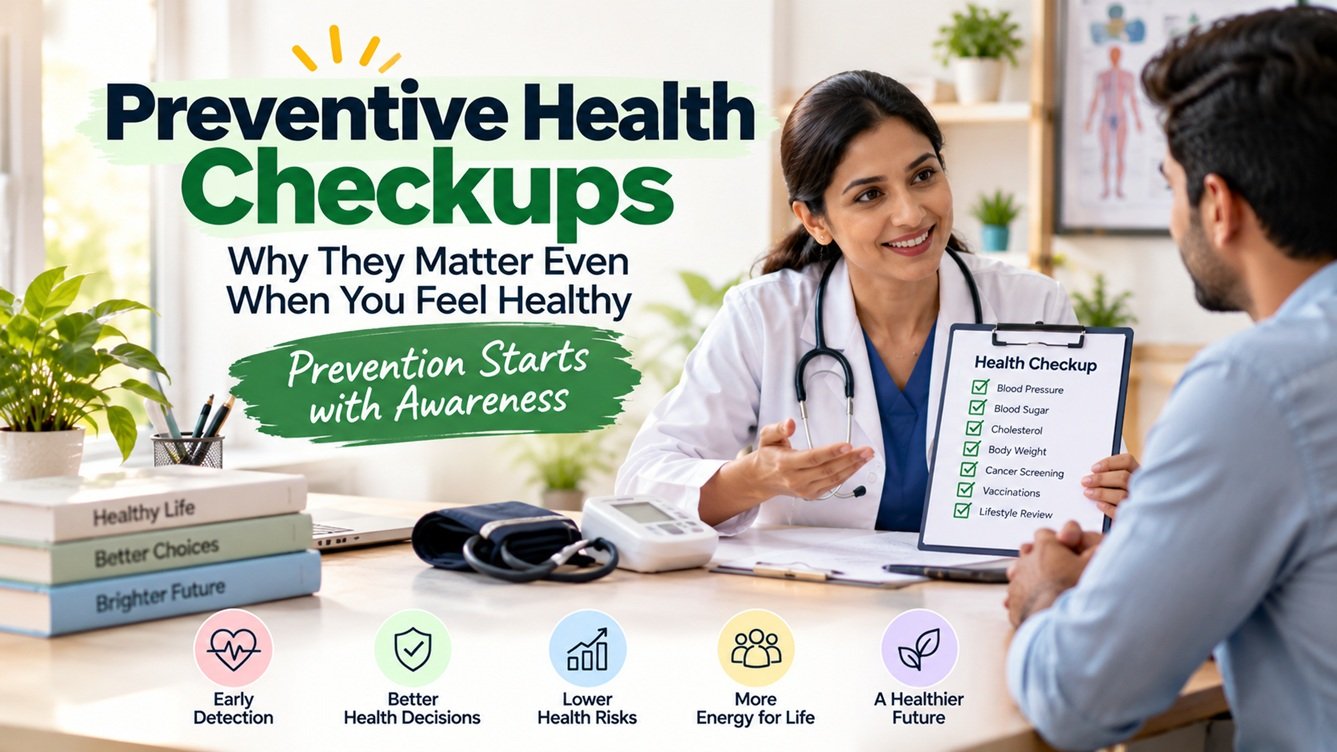
Quick Answer: Why Are Preventive Health Checkups Important?
Preventive health checkups help you and your healthcare professional assess relevant health risks, review your medical history and decide whether particular screening tests or preventive measures are appropriate. They can help identify selected conditions or risk factors before noticeable symptoms develop.
The right approach depends on your age, medical history, family history, lifestyle, previous results and individual risk factors. A preventive checkup should be personalised rather than treated as a fixed package of tests that everyone needs.
Key Takeaways
Feeling healthy does not rule out every health condition or risk factor.
Preventive healthcare includes medical history reviews, appropriate screening, vaccination guidance and lifestyle advice.
Blood pressure assessment is an important part of preventive care for adults.
Screening for diabetes and certain cancers may be appropriate depending on individual risk and applicable clinical guidelines.
No single health checkup package is suitable for everyone.
Unnecessary tests can create costs, anxiety, false-positive results and follow-up procedures that may not be beneficial.
Regular checkups do not replace medical attention when symptoms develop.
Healthy everyday habits and appropriate medical care work together to support long-term well-being.
1. What Is Preventive Healthcare?
Preventive healthcare refers to actions taken to maintain health, reduce avoidable risks and identify certain health conditions at an appropriate stage.
It is different from treatment that begins after a disease or injury has already been identified, although preventive care and treatment often overlap.
For example, a healthcare professional might review your blood pressure, discuss your family history, check whether you are due for particular vaccinations and assess whether you would benefit from a screening test.
The purpose is not to find a problem in every person. It is to identify which preventive actions are likely to be useful for that individual.
The three broad levels of prevention
Primary prevention: Actions intended to reduce the likelihood of illness before it develops. Examples include appropriate vaccination, avoiding tobacco, physical activity and other evidence-based preventive measures.
Secondary prevention: Screening or early detection intended to identify selected conditions or precancerous changes before symptoms appear, when early intervention may improve outcomes.
Tertiary prevention: Care that helps manage an existing condition, reduce complications and maintain quality of life.
A routine health appointment may include elements of more than one level, depending on your needs.
Preventive care is more than blood tests
A meaningful preventive health visit may include:
Reviewing personal and family medical history.
Checking blood pressure and other relevant measurements.
Discussing nutrition, physical activity, sleep and tobacco use.
Reviewing vaccinations and age-appropriate screening.
Assessing whether specific investigations are indicated.
Discussing existing symptoms, medications and health concerns.
Planning follow-up when results or risk factors require attention.
The right combination depends on the person, not the number of tests included in a package.
2. Why You Can Feel Healthy Even When a Health Risk Exists
The body does not always produce noticeable symptoms when a health condition first develops.
For example, high blood pressure may not cause obvious discomfort, particularly in its earlier stages. Some people with elevated blood glucose may also have few or no noticeable symptoms.
This means that waiting until you feel unwell is not always the best way to identify every important health risk.
Examples of conditions that may require assessment before symptoms appear
| Health concern | Why preventive assessment may matter |
|---|---|
| High blood pressure | Elevated blood pressure can exist without noticeable symptoms and is associated with cardiovascular risk |
| Diabetes and prediabetes | Screening may identify abnormal glucose regulation in people who meet appropriate clinical criteria |
| Abnormal blood lipids | Cholesterol-related risk assessment may help guide cardiovascular prevention for suitable individuals |
| Certain cancers | Screening for specific cancers may detect selected abnormalities before symptoms develop |
| Vaccination gaps | Reviewing vaccination history can identify opportunities to prevent particular infections |
These examples do not mean that everyone needs every test. The usefulness of screening depends on factors such as age, personal risk, the accuracy of the test and whether early detection leads to better outcomes.
The World Health Organization explains that screening aims to identify people who may have a health condition or elevated risk while they are apparently healthy. It also emphasises the importance of screening programmes that maximise benefits and minimise harm.
Source: WHO — Screening.
3. What Should a Preventive Health Checkup Include?
There is no universal list of tests that every adult should complete every year.
A useful preventive appointment begins with a discussion of your current health, personal circumstances and risk factors. The healthcare professional can then decide which assessments are appropriate.
A. Medical history review
Your medical history can help guide preventive decisions. Be prepared to discuss:
Previous medical conditions and operations.
Medicines and supplements you currently use.
Health conditions that run in your family.
Tobacco use, alcohol consumption and other relevant lifestyle factors.
Changes in weight, sleep, physical activity or general well-being.
Previous abnormal test results and any recommended follow-up.
Your vaccination history, where known.
Family history is particularly relevant when close relatives have experienced certain conditions at an unusually young age or when a condition may have an inherited component.
B. Blood pressure assessment
Blood pressure measurement is a common part of preventive adult healthcare. Elevated readings can be present without obvious symptoms.
An unusually high reading should not automatically be treated as a confirmed diagnosis based on one measurement alone. Your healthcare professional may recommend repeat measurements or home or ambulatory monitoring to confirm the result.
The US Preventive Services Task Force recommends blood pressure screening for adults aged 18 years and older and recommends confirmation outside the clinical setting before starting treatment for hypertension.
This is an example of a clinical guideline; the frequency and follow-up appropriate for you should be discussed with your healthcare professional.
Source: USPSTF — Hypertension in Adults: Screening.
C. Blood glucose assessment
Blood glucose testing may be appropriate for people with certain risk factors, symptoms or other clinical indications.
Factors such as age, weight, family history, previous glucose results and other medical conditions may influence whether screening is recommended.
Do not assume that everyone needs the same glucose test at the same interval. Your healthcare professional can explain which test, if any, is suitable and when it should be repeated.
D. Cholesterol and cardiovascular risk assessment
A cholesterol test may be useful when assessing cardiovascular risk, but its timing and interpretation depend on individual circumstances.
A healthcare professional may consider age, blood pressure, diabetes, tobacco use, family history, previous results and other relevant factors when deciding whether lipid testing is appropriate.
A cholesterol result should not be interpreted in isolation. The wider risk profile and potential benefits of any recommended intervention matter too.
E. Age- and risk-appropriate cancer screening
Some screening programmes aim to identify particular cancers or precancerous changes before symptoms appear.
The appropriate screening method, starting age and interval vary by cancer type, individual risk and the clinical guidance applicable in your location.
In India, the National Health Mission has published operational guidance covering prevention, screening and control of common non-communicable diseases, including selected cancers.
Source: National Health Mission — Operational Guidelines on Prevention, Screening and Control of Common NCDs.
Ask your healthcare professional which screenings are appropriate for you. Do not assume that a test recommended for one age group or risk profile is necessary for everyone.
F. Vaccination review
Vaccinations are an important part of preventive healthcare. Your needs may depend on age, previous doses, medical conditions, occupation, travel and other circumstances.
Bring any available vaccination records to your appointment. Your healthcare professional can help identify recommended vaccines or doses that may be due.
G. Lifestyle and mental well-being review
A preventive health conversation can also include physical activity, nutrition, sleep, tobacco use, alcohol, stress and mental well-being.
These discussions can help you identify practical changes and determine whether additional support is appropriate.
Preventive care should consider the whole person rather than focusing only on laboratory values.
4. How Often Should You Get a Health Checkup?
There is no single interval that is correct for every adult.
The appropriate frequency depends on your health status, age, family history, risk factors, previous findings and the screening recommendations relevant to you.
A healthy adult with no known risk factors may need a different schedule from someone with diabetes, hypertension, a strong family history of certain diseases or previous abnormal results.
Factors that influence your checkup schedule
| Factor | Why It Matters |
|---|---|
| Age | Some screening recommendations change as you get older |
| Family history | Certain conditions may require earlier or more tailored assessment |
| Existing conditions | Ongoing conditions may need regular monitoring and follow-up |
| Previous results | Abnormal findings may require repeat tests or additional evaluation |
| Lifestyle and exposures | Tobacco use and other risk factors can influence preventive recommendations |
| Pregnancy or other life changes | Specific preventive care may become appropriate at different life stages |
Rather than booking an identical package every year, ask your healthcare professional to help you create an appropriate preventive care schedule.
Important: If you develop new or concerning symptoms, do not wait until your next routine checkup. Seek medical advice based on the nature and severity of the symptoms.
5. Preventive Health Checkups for Busy Working Professionals
Working professionals often postpone healthcare because of deadlines, commuting, family responsibilities and limited time.
The problem is that health appointments can become another task that is repeatedly pushed to the following month.
A practical solution is to make preventive care part of your planning rather than waiting for the perfect time.
A realistic approach for working professionals
Step 1: Review your existing records. Check your previous medical reports, vaccination records and any follow-up advice you have received.
Step 2: Book a suitable appointment. Choose a time that allows you to attend without rushing. If your workplace offers preventive health services, ask what is included and whether the services are appropriate for your needs.
Step 3: Prepare your questions. Write down any health concerns, family history and questions about screening or lifestyle changes.
Step 4: Understand the plan. Ask which tests are recommended and why, whether preparation is needed, and when you should expect results.
Step 5: Schedule follow-up. If a test or assessment identifies something that requires further attention, understand the next step and when it should happen.
A simple preventive health planning table
| Task | Suggested Action |
|---|---|
| Medical history | Record relevant conditions and family history |
| Previous reports | Collect available results and prescriptions |
| Appointment | Arrange a consultation at a convenient time |
| Questions | Write down concerns and screening questions |
| Follow-up | Record any recommended next steps and dates |
This approach can make the process more manageable without turning healthcare into a complicated project.
6. Why More Tests Do Not Always Mean Better Healthcare
It can be tempting to choose the largest available health package because it appears to offer the most complete picture of your health.
However, more testing does not automatically produce better outcomes.
A test may have limited usefulness for someone with a very low likelihood of the condition being investigated. Some tests can produce false-positive results, meaning an abnormal result occurs even when the person does not have the condition being tested for.
This may lead to anxiety, additional investigations, unnecessary procedures and extra costs.
Some tests may also detect abnormalities that would never have caused significant harm during a person’s lifetime. This is one reason screening recommendations consider both potential benefits and possible harms.
Questions to ask before agreeing to a test
What condition or risk is this test intended to assess?
Why is the test appropriate for my age and medical history?
What would happen if the result were abnormal?
Could the test produce a false-positive or misleading result?
Are there any risks or preparation requirements?
Are there alternative approaches?
Will the result change my care or management?
These are reasonable questions to discuss with your healthcare professional. They are not a reason to reject a recommended test automatically; they help you understand its purpose.
The WHO’s guidance on cancer screening highlights the importance of maximising effectiveness while minimising potential harm.
Source: WHO — A Short Guide to Cancer Screening.
7. How to Prepare for Your Preventive Health Appointment
A little preparation can make a medical appointment more useful.
You do not need to memorise your entire medical history. Bringing relevant information and asking clear questions is often enough to get started.
Before the appointment
Collect previous test results and relevant medical records.
Make a list of current medicines and supplements.
Write down important family medical history.
Note any symptoms or changes you have noticed, even if they seem minor.
Prepare questions about screening, vaccinations and lifestyle.
Ask the clinic whether any test requires fasting or other preparation.
Do not fast unnecessarily unless your healthcare professional or laboratory has instructed you to do so. Preparation requirements differ between tests.
During the appointment
Explain your concerns honestly and ask for clarification if you do not understand a recommendation.
If a test is suggested, you can ask why it is needed, what the result might mean and what the next step would be.
If you have concerns about cost, time or access, discuss those barriers. A healthcare professional may be able to help prioritise the most relevant actions.
After the appointment
Keep a record of the recommendations and any follow-up dates. If a test result is abnormal, ask what it means in your specific circumstances rather than assuming the worst or ignoring it.
A result may need confirmation, interpretation alongside other information or further assessment. Follow the advice given by your healthcare professional.
8. Everyday Habits That Complement Preventive Healthcare
Preventive checkups are valuable, but they cannot replace the everyday actions that support health.
You can combine appropriate medical care with sustainable habits that fit your circumstances.
Eat a balanced diet
Include a variety of vegetables, fruits, pulses, whole grains and suitable protein sources. Limit excessive intake of salt, added sugar and foods high in unhealthy fats, while adapting your diet to your individual needs.
Stay physically active
Choose movement you can maintain, such as walking, cycling, dancing, strength exercises or another suitable activity. Start gradually if you have been inactive or have health concerns.
Prioritise sleep
Maintain a reasonably consistent sleep schedule and seek help if persistent sleep problems affect your daily functioning.
Avoid tobacco
Avoid tobacco products and seek appropriate support if you want help stopping their use.
Manage alcohol use
Understand the health risks associated with alcohol and discuss your circumstances with a healthcare professional if you need support reducing or stopping consumption.
Protect your mental well-being
Maintain supportive relationships, make time for rest and seek professional help when stress or emotional difficulties become difficult to manage.
These habits support a broader approach to health, but they do not guarantee that disease will never develop. Preventive healthcare combines healthy behaviours with appropriate medical assessment.
9. Common Mistakes to Avoid
Waiting until symptoms become severe
Some health conditions may develop without obvious early symptoms. Follow appropriate preventive recommendations rather than relying entirely on how you feel.
Booking tests without understanding their purpose
A large package may contain tests that are not useful for your particular circumstances. Ask your healthcare professional which assessments are appropriate and why.
Ignoring abnormal results
Do not dismiss an abnormal result simply because you feel well. Ask what it means and whether confirmation, monitoring or treatment is recommended.
Assuming an abnormal result means a serious disease
An abnormal screening result does not always mean that you have the condition being investigated. Follow the recommended process for interpretation and confirmation.
Assuming normal results guarantee perfect health
No checkup can rule out every disease or future health risk. Normal results are reassuring within the limits of the tests performed, but they do not eliminate the need to respond to new symptoms.
Forgetting follow-up
The value of a checkup depends partly on what happens afterwards. Keep track of recommended follow-up tests, appointments and preventive actions.
Neglecting everyday health habits
Medical screening is only one part of prevention. Sleep, nutrition, movement, avoiding tobacco and other appropriate habits also contribute to health.
Frequently Asked Questions About Preventive Health Checkups
1. Why are preventive health checkups important if I feel healthy?
Some health conditions and risk factors may not cause obvious symptoms in their early stages. Appropriate preventive assessment can help identify selected risks and guide timely care. The tests you need depend on your individual circumstances.
2. Should everyone get a full-body checkup every year?
No. There is no single full-body testing package that is necessary for every person every year. Screening should be based on age, medical history, risk factors, previous results and relevant clinical recommendations.
3. What is usually included in a preventive health checkup?
A preventive appointment may include a medical history review, blood pressure assessment, lifestyle discussion, vaccination review and selected screening tests when appropriate. The exact content should be tailored to the individual.
4. Which tests should adults consider?
Depending on age and risk, a healthcare professional may consider blood pressure assessment, diabetes screening, lipid testing and certain cancer screenings, among other preventive measures. Not everyone needs every test, and the recommended schedule varies.
5. How often should I have my blood pressure checked?
The appropriate frequency depends on your previous readings, age, risk factors and medical history. Blood pressure screening is recommended for adults, but the timing and confirmation of elevated readings should be discussed with a healthcare professional.
6. Can a health checkup detect every disease?
No. No screening programme or group of tests can detect every disease or predict every future health problem. Screening tests have specific purposes and limitations.
7. Are preventive health checkups expensive in India?
Costs vary by location, provider, test selection and healthcare setting. A consultation with a primary care doctor can help identify which assessments are most relevant, so you can prioritise appropriate care instead of paying for unnecessary tests.
8. Should I fast before a preventive health checkup?
Not necessarily. Some tests may require fasting, while others do not. Follow the specific instructions provided by your healthcare professional or laboratory rather than fasting automatically.
9. What should I do if my screening result is abnormal?
Contact the healthcare professional who ordered the test and ask what the result means. Depending on the test, you may need repeat measurements, confirmatory testing, additional evaluation or treatment. Do not diagnose yourself based on one result.
10. Are preventive checkups a substitute for healthy habits?
No. Appropriate screening and healthy habits complement each other. A checkup does not compensate for ongoing harmful exposures or guarantee that illness will not develop.
When Should You Seek Medical Advice?
Preventive checkups are intended for planned health assessment, not to delay evaluation of symptoms.
Arrange a medical appointment if you develop persistent or concerning symptoms, notice significant changes in your health or have concerns related to your personal or family medical history.
Seek urgent medical attention for emergency warning signs such as severe chest pain, severe difficulty breathing, sudden weakness on one side of the body or sudden difficulty speaking. Do not wait for a routine appointment in these situations.
If you have an existing medical condition or take regular medication, follow the monitoring schedule recommended by your treating healthcare professional rather than relying on a general annual checkup.
Your Preventive Health Checklist
Use this checklist to prepare for your next healthcare appointment.
I know the relevant details of my medical history.
I have reviewed my family health history.
I have collected previous medical reports where available.
I have made a list of medicines and supplements I use.
I have noted questions or health concerns I want to discuss.
I understand which screenings may be appropriate for me.
I know whether any recommended test requires preparation.
I understand how and when I will receive the results.
I have recorded any recommended follow-up.
I am continuing healthy daily habits alongside appropriate medical care.
Final Thoughts: Prevention Begins with Awareness
Preventive health checkups are not about searching for illness everywhere or completing as many tests as possible. They are about making informed decisions that are appropriate for your age, health history and individual risk.
Feeling healthy is valuable, but it should not be the only factor guiding your healthcare decisions. Appropriate screening, timely medical advice, healthy everyday habits and follow-up care can work together to support long-term well-being.
At Holistic Health with Pravin, we believe that a balanced life begins with awareness and practical action. You do not need to become anxious about every possible health risk. You need a sensible plan, reliable information and the willingness to seek care when it is appropriate.
Your action for today: Review your previous medical records and write down three questions you would like to ask a healthcare professional about your preventive care.
A healthier future is not built through fear. It is built through informed choices, consistent habits and appropriate care.
Disclaimer: This article is for general educational purposes only and does not replace personalised medical advice. Screening recommendations vary by individual circumstances and local clinical guidance. Discuss the benefits, limitations and potential risks of tests with a qualified healthcare professional.
Sources and Further Reading
World Health Organization — Screening
An overview of the purpose of screening and the importance of balancing potential benefits and harms.
https://www.who.int/europe/teams/ncd-management/screeningWorld Health Organization — A Short Guide to Cancer Screening
Guidance on screening effectiveness, early detection and minimising potential harm.
https://www.who.int/publications/i/item/9789289057561National Health Mission, India — Operational Guidelines on Prevention, Screening and Control of Common Non-Communicable Diseases
Indian public health guidance covering hypertension, diabetes and selected common cancers.US Preventive Services Task Force — Hypertension in Adults: Screening
Evidence-based recommendations for adult blood pressure screening and confirmation of elevated readings.
https://www.uspreventiveservicestaskforce.org/uspstf/recommendation/hypertension-in-adults-screening