
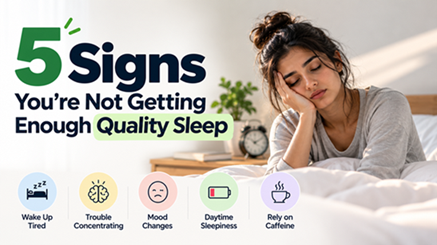
5 Signs You're Not Getting Enough Quality Sleep
You might be spending seven or eight hours in bed and still waking up tired. Perhaps you struggle to concentrate at work, feel unusually irritable during the day, depend on coffee to stay alert or find yourself fighting sleep during the afternoon.
If this sounds familiar, it may be time to look beyond the number of hours you sleep and pay attention to your sleep quality.
Sleep is not simply a break from your daily responsibilities. It is an essential biological process that supports attention, memory, emotional regulation, physical recovery and overall health. When your sleep is regularly interrupted, poorly timed or insufficient, you may notice the effects in your everyday life—even if you don’t immediately recognize them as sleep-related.
The good news is that understanding the warning signs can help you make practical changes to your routine and recognize when professional advice may be necessary.
In this guide, we’ll explore five common signs of poor sleep quality, what may be causing them, how to improve your sleep habits and when persistent symptoms deserve medical attention.
Quick Answer
Five common signs that you may not be getting enough quality sleep are waking up tired despite spending enough time in bed, struggling to concentrate, experiencing mood changes, feeling sleepy during the day and relying heavily on caffeine to stay alert.
These symptoms can occur when you aren’t sleeping enough or your sleep is frequently disrupted. However, they are not proof of a sleep disorder by themselves. Stress, medication effects and other health conditions can cause similar symptoms.
Most adults need at least seven hours of sleep per night, although individual needs vary. Sleep quality, regularity and continuity also matter. Centers for Disease Control and Prevention provides guidance on recommended sleep duration and healthy sleep habits.
Key Takeaways
Sleep duration and sleep quality are different. Spending enough time in bed does not always mean you are getting restorative sleep.
Daytime symptoms matter. Persistent fatigue, poor concentration, irritability and unintended sleepiness can indicate that your sleep needs attention.
Your routine influences sleep. Irregular bedtimes, late caffeine, evening light and stress may interfere with your ability to sleep well.
More sleep isn’t always the only answer. Snoring, breathing interruptions and other symptoms may indicate a problem that needs medical assessment.
Small, consistent habits can help. A regular sleep schedule, a comfortable bedroom and a relaxing evening routine are practical starting points.
Persistent symptoms deserve attention. Don’t assume that ongoing exhaustion is simply part of having a busy lifestyle.
1. You Wake Up Tired Even After a Full Night in Bed
One of the most noticeable signs of poor sleep quality is waking up feeling exhausted even when you believe you’ve slept long enough.
You might go to bed at 10:30 PM, wake up at 6:30 AM and still feel as though you haven’t rested properly. You may struggle to get out of bed, feel sluggish while getting ready for work or need several cups of tea or coffee before you feel alert.
This can happen when sleep is interrupted frequently, your sleep schedule doesn’t match your body’s natural rhythm or a sleep-related condition is affecting the quality of your rest. The National Heart, Lung, and Blood Institute explains that sleep deficiency includes not only getting too little sleep but also sleeping at the wrong time or experiencing poor-quality sleep.
What You May Notice
You rarely feel refreshed when you wake up.
You hit the snooze button repeatedly.
You feel tired despite allowing enough time for sleep.
You struggle to feel alert during the first few hours of the day.
You need caffeine almost immediately after waking.
Occasionally waking up tired is normal. The concern is when it becomes a regular pattern that affects your daily life.
What Can Help?
Start by checking how much sleep you’re actually getting. Most adults aged 18–60 need at least seven hours per night, and some need more. Remember that time spent in bed isn’t necessarily the same as time spent asleep.
Try maintaining a consistent bedtime and wake-up time, including on weekends. Make your bedroom comfortable, dark and quiet, and allow enough time to wind down before bed.
If you regularly wake up exhausted despite getting enough sleep, consider whether another issue could be affecting your rest.
2. You Struggle to Concentrate or Experience Brain Fog
Have you ever sat down to work, opened your laptop and found yourself reading the same paragraph repeatedly without understanding it?
Perhaps you forget small details, take longer to finish simple tasks or find it difficult to make decisions that would normally feel straightforward.
Poor sleep can affect attention, memory, learning, reaction time and problem-solving. These effects can become particularly noticeable when you’re trying to manage a busy workday, attend meetings or complete tasks that require sustained concentration.
For working professionals, this can create a frustrating cycle. You feel tired, work more slowly, spend extra time finishing tasks and then sacrifice your evening or bedtime to catch up.
Over time, that pattern can leave even less room for recovery.
What You May Notice
Symptom | How It May Affect Your Day |
|---|---|
Difficulty concentrating | You lose focus during meetings or while reading |
Forgetfulness | You misplace things or forget routine tasks |
Slower reactions | You take longer to respond or make decisions |
Reduced productivity | Simple work takes longer than usual |
Mental fatigue | You feel mentally drained earlier in the day |
These symptoms are not exclusive to poor sleep. Stress, anxiety, certain medications and other health conditions can also affect concentration.
What Can Help?
Give yourself a realistic sleep opportunity before trying to solve brain fog with productivity techniques.
You can also make your working day easier by taking short breaks, limiting unnecessary multitasking and keeping a written list of important tasks.
If you’re consistently struggling to concentrate despite getting adequate sleep, don’t automatically blame your lifestyle. Persistent or worsening symptoms deserve further assessment.
3. Your Mood Changes More Easily Than Usual
Poor sleep doesn’t always show up as physical tiredness. Sometimes, the first thing you notice is a change in how you respond to everyday situations.
You may become irritated by small inconveniences, feel less patient with family members, become frustrated at work or find it harder to manage stress.
Perhaps a routine problem that you would normally handle calmly suddenly feels overwhelming.
Sleep supports the brain processes involved in emotional regulation and decision-making. Sleep deficiency can make it harder to manage emotions, respond to challenges and interpret other people’s reactions.
This doesn’t mean that every mood change is caused by poor sleep. Emotional well-being is influenced by many factors, including work pressure, relationships, physical health and personal circumstances.
However, if you notice that you are consistently more irritable or emotionally drained after restless nights, your sleep habits are worth reviewing.
What You May Notice
You become impatient more quickly.
Small problems feel unusually stressful.
You feel less motivated to do things you usually enjoy.
You find it harder to handle disagreements calmly.
You feel emotionally exhausted by the end of the day.
What Can Help?
Start by creating a more predictable evening routine. Give yourself time to transition away from work, reduce stimulating activities close to bedtime and avoid carrying every unfinished task into the night.
A short walk, gentle stretching, reading or quiet conversation may help you unwind, depending on what you find relaxing.
If low mood, anxiety or loss of interest persists, seek professional support rather than assuming sleep is the only explanation. Sleep and mental well-being can influence each other, but one should not automatically be treated as the sole cause of the other.
4. You Feel Sleepy Throughout the Day
Feeling a little tired after a demanding day is normal. Feeling as though you could fall asleep during routine activities is different.
You might struggle to stay awake during meetings, feel overwhelmingly sleepy after lunch, doze off while watching television or find it difficult to remain alert during a commute.
Frequent daytime sleepiness can be a sign of sleep deficiency. It may also occur when your sleep schedule is misaligned with your body’s natural rhythm or when a sleep disorder is interrupting your rest.
This is particularly important for people who work long hours, perform safety-sensitive tasks or drive regularly.
What You May Notice
Situation | What to Pay Attention To |
|---|---|
During meetings | You struggle to keep your eyes open |
After lunch | You repeatedly feel close to falling asleep |
While reading | You doze off unintentionally |
During your commute | You find it difficult to stay alert |
During routine work | You feel sleepy even when the task isn’t physically demanding |
What Can Help?
First, check whether you’re consistently allowing enough time for sleep. A late bedtime combined with an early alarm can gradually build up sleep debt.
Also consider whether your sleep is being interrupted. Loud snoring, repeated awakenings or irregular work shifts can make it harder to obtain restorative sleep.
Important: If you feel sleepy while driving, stop somewhere safe rather than trying to push through it with loud music, open windows or caffeine. Drowsy driving can be dangerous.
If daytime sleepiness occurs regularly despite adequate sleep, speak with a healthcare professional.
5. You Rely on Caffeine to Get Through the Day
A morning cup of tea or coffee can be part of an ordinary routine. The concern is not caffeine itself, but feeling that you cannot function without repeatedly consuming it.
Perhaps you drink coffee as soon as you wake up, another cup mid-morning, something caffeinated after lunch and another drink in the late afternoon because you’re struggling to stay alert.
You may then find it harder to fall asleep at night, creating a cycle in which poor sleep leads to more caffeine, and caffeine taken too late makes the next night’s sleep more difficult.
Caffeine can temporarily increase alertness, but it does not replace the restorative functions of sleep. Caffeine sensitivity varies, and consuming it too close to bedtime can interfere with sleep.
What You May Notice
You feel unable to start your day without caffeine.
You repeatedly reach for tea or coffee when your energy drops.
You consume caffeine late in the afternoon or evening.
You feel tired but struggle to fall asleep at night.
You use caffeine to compensate for consistently short sleep.
These patterns don’t prove that you have poor sleep quality, but they can be a useful reason to examine your routine.
What Can Help?
Track how much caffeine you consume and when you consume it. If you regularly drink caffeinated beverages late in the day, consider moving them earlier and observing whether your sleep improves.
If you consume large amounts of caffeine, reducing it gradually may be more comfortable than stopping abruptly.
Most importantly, address the reason you feel tired in the first place. If you’re consistently sleeping too little, adjusting your bedtime is likely to be more useful than adding another cup of coffee.
What Is the Difference Between Sleep Quantity and Sleep Quality?
Sleep quantity refers to how much time you spend sleeping. Sleep quality refers to how well you sleep, including whether your sleep is sufficiently uninterrupted and refreshing.
Both matter.
Sleep Quantity | Sleep Quality |
|---|---|
How long you sleep | How well you sleep |
Total sleep duration | Continuity and restfulness |
Whether you allow enough time for sleep | Whether you frequently wake up or experience disruptions |
Influenced by bedtime and wake-up time | Influenced by sleep habits, environment and possible sleep disorders |
For example, someone may spend eight hours in bed but wake up repeatedly throughout the night. Another person may sleep for a shorter period because of an early alarm and feel tired because they haven’t allowed enough time for rest.
Neither situation should be assessed using hours alone.
The CDC identifies difficulty falling asleep, repeated waking during the night and feeling tired despite getting enough sleep as signs that sleep quality may be a concern.
How Much Quality Sleep Do You Actually Need?
Sleep needs vary with age, health and individual circumstances.
For most adults aged 18–60, the CDC recommends at least seven hours of sleep per night. Adults aged 61–64 are generally advised to get seven to nine hours, while adults aged 65 and older are generally advised to get seven to eight hours.
The table below provides a general reference.
Age Group | General Recommended Sleep |
|---|---|
Adults aged 18–60 | 7 or more hours |
Adults aged 61–64 | 7–9 hours |
Adults aged 65 and older | 7–8 hours |
These are general recommendations, not a guarantee that every person will feel rested after a specific number of hours.
If you regularly need more sleep than expected or feel exhausted despite allowing enough time for it, consider discussing your symptoms with a healthcare professional.
7 Practical Ways to Improve Sleep Quality Naturally
Recognizing the signs is the first step. The next step is creating a routine that gives you a better opportunity to sleep well.
You don’t need to change everything in one night. Begin with a few habits that fit your work schedule and daily responsibilities.
1. Keep a Consistent Sleep Schedule
Try to go to bed and wake up at approximately the same times every day, including weekends where possible.
Your body’s internal clock responds to regular patterns of light, darkness and sleep timing. A more consistent schedule can help support your sleep-wake rhythm.
If you currently sleep very late, shift your bedtime gradually rather than expecting yourself to fall asleep several hours earlier immediately.
2. Create a Relaxing Evening Routine
Give yourself time to move from work mode to rest mode.
You might spend the final 30–60 minutes before bed reading, listening to calming music, preparing for the next day or doing gentle stretches.
The best routine is one that helps you wind down without creating another demanding checklist.
3. Reduce Late-Night Screen Stimulation
Scrolling through short videos, responding to work messages and watching stimulating content can keep you mentally engaged when you’re trying to relax.
Bright artificial light late in the evening can also affect the body’s sleep-wake timing.
Try putting your phone aside before bedtime, dimming the lights and choosing a calmer activity. If you need your phone for an alarm, place it away from your pillow so that it is less tempting to keep scrolling.
4. Pay Attention to Caffeine Timing
Tea, coffee, energy drinks and other caffeinated products can affect sleep, particularly when consumed late in the day.
Notice how caffeine affects you and consider avoiding it for several hours before bedtime. The appropriate cutoff varies between individuals, so observe your own response rather than assuming everyone reacts the same way.
5. Make Your Bedroom Comfortable
Your sleep environment should support rest rather than compete with it.
Where possible, keep your bedroom:
Dark enough for comfortable sleep.
Quiet or protected from disruptive noise.
At a comfortable temperature.
Suitable for rest, with a supportive mattress and pillow.
If you live in a noisy household or busy urban area, practical changes such as heavier curtains, earplugs or reducing unnecessary light may help, depending on your circumstances.
6. Stay Physically Active During the Day
Regular physical activity supports overall health and can be part of a healthy sleep routine.
Walking, cycling, exercise or other movement can fit into your day according to your fitness level and schedule. The CDC also recommends regular physical activity as part of healthy sleep habits.
You don’t need to complete a strenuous workout every evening. Choose an activity you enjoy and avoid scheduling vigorous exercise too close to bedtime if it makes it harder for you to fall asleep.
7. Manage Stress Before Bedtime
Unfinished work, financial worries, family responsibilities and tomorrow’s to-do list can make it difficult to switch off mentally.
You don’t have to resolve every problem before sleeping. Instead, try giving your thoughts a place to go.
Write down the tasks you need to handle tomorrow, make a short plan or spend a few minutes practising slow breathing.
If stress or anxiety continues to interfere with your sleep, professional support may help you address the underlying issue.
A Simple Evening Routine for Working Professionals
You don’t need a complicated sleep ritual. The following example shows how an ordinary evening can be structured to create more time for rest.
Example Time | Habit |
|---|---|
8:30 PM | Finish dinner according to your schedule and needs |
9:00 PM | Complete essential tasks and prepare for tomorrow |
9:30 PM | Reduce work messages and stimulating screen activities |
9:45 PM | Read, stretch or practise a relaxing activity |
10:00 PM | Dim the lights and prepare for bed |
10:30 PM | Bedtime, adjusted to your wake-up time and sleep needs |
These times are only an example. If you work late shifts, have family responsibilities or follow a different schedule, adapt the routine to your circumstances.
The objective is to allow enough time for sleep and create a predictable transition into the night.
Common Sleep Mistakes to Avoid
Mistake 1: Assuming More Time in Bed Always Means Better Sleep
Spending more time in bed doesn’t necessarily resolve repeated awakenings, sleep disorders or an irregular body clock. If you continue to feel exhausted despite adequate sleep opportunity, look into possible causes rather than simply extending your bedtime indefinitely.
Mistake 2: Using Caffeine to Hide Persistent Fatigue
Caffeine may temporarily improve alertness, but relying on it to get through every day can leave the underlying sleep problem unaddressed.
Mistake 3: Changing Your Entire Routine Overnight
Trying to change your bedtime, diet, exercise schedule, screen habits and morning routine simultaneously can become overwhelming.
Start with one or two realistic changes, then build gradually.
Mistake 4: Ignoring Snoring and Repeated Nighttime Awakenings
Loud, persistent snoring accompanied by breathing pauses, gasping or significant daytime sleepiness may indicate sleep apnoea, a condition in which breathing repeatedly stops and starts during sleep. It should be assessed by a healthcare professional.
Mistake 5: Assuming All Fatigue Comes From Poor Sleep
Fatigue can have many causes, including stress, medication effects, anaemia, thyroid problems and other health conditions. If your tiredness is persistent or unexplained, don’t rely on sleep-habit changes alone.
FAQs About Poor Sleep Quality
What are the five signs you’re not getting enough quality sleep?
Common signs include waking up unrefreshed, difficulty concentrating, mood changes, excessive daytime sleepiness and relying heavily on caffeine to stay alert. These symptoms can suggest a sleep problem, but they can also have other causes.
How do I know if I’m getting enough quality sleep?
You are more likely to be getting sufficient sleep when you sleep for an appropriate duration, wake feeling reasonably refreshed and remain alert during the day. Regular nighttime awakenings, persistent tiredness and difficulty staying awake can indicate that your sleep needs attention.
Why am I tired even after eight hours of sleep?
Possible reasons include fragmented sleep, an irregular sleep schedule, stress, medication effects or a sleep disorder such as sleep apnoea. Other health conditions can also cause fatigue. If this happens regularly, discuss it with a healthcare professional.
Can poor sleep affect mental health?
Yes. Sleep deficiency can affect emotional regulation, concentration and the ability to cope with stress. Sleep and mental well-being are closely related, although persistent emotional symptoms can have several causes and may require their own assessment.
What is the best way to improve sleep quality naturally?
Start with a consistent sleep schedule, enough time for sleep, a comfortable bedroom, reduced evening stimulation, appropriate caffeine timing, regular physical activity and a relaxing bedtime routine.
If symptoms persist despite these changes, seek professional advice.
Is seven hours of sleep enough?
Seven hours is the general minimum recommended for most adults aged 18–60, but individual sleep needs vary. Some people need more to feel rested and function well.
Can sleeping late cause poor sleep quality?
A late bedtime does not automatically mean your sleep is poor. The effect depends on how much you sleep, how consistent your schedule is and whether your sleep timing fits your daily responsibilities and internal body clock. Irregular schedules can make it harder to obtain sufficient, well-timed sleep.
Does using a phone before bed affect sleep?
Late-night screen use can keep you mentally engaged and expose you to artificial light that may affect sleep timing. Reducing stimulating screen activities and dimming the lights before bed may help support a more relaxing evening routine.
When should I see a doctor about poor sleep?
Seek professional advice if you regularly struggle to sleep, feel exhausted despite allowing enough time for rest, experience persistent daytime sleepiness or have symptoms such as loud snoring and breathing interruptions during sleep. A healthcare professional can help determine whether further assessment or a sleep study is appropriate.
When Should You Consult a Healthcare Professional?
Occasional tiredness is common, particularly after a stressful day or a night of disrupted sleep. However, persistent symptoms should not be ignored.
Consider arranging a medical appointment if:
You feel tired for several weeks without an obvious explanation.
Fatigue interferes with work, relationships or everyday activities.
You regularly wake up gasping, choking or short of breath.
Someone notices pauses in your breathing while you sleep.
You experience persistent insomnia or excessive daytime sleepiness.
You have fatigue alongside unexplained weight changes, mood changes or other new symptoms.
These symptoms do not necessarily mean you have a sleep disorder, but they warrant appropriate evaluation.
If you are struggling to stay awake while driving or performing another safety-sensitive task, stop the activity safely and arrange appropriate support rather than attempting to push through the sleepiness.
Practical Sleep Quality Checklist
Use this checklist to review your habits over the coming week.
Habit | What to Check |
|---|---|
Sleep duration | Am I allowing enough time to sleep? |
Consistency | Are my bedtime and wake-up time reasonably regular? |
Nighttime waking | Do I wake frequently or struggle to return to sleep? |
Caffeine | Am I consuming caffeine too close to bedtime? |
Screen use | Am I scrolling or working right up until bedtime? |
Sleep environment | Is my bedroom dark, quiet and comfortable? |
Daytime alertness | Do I regularly feel sleepy or exhausted? |
Warning signs | Do I snore loudly or experience breathing interruptions? |
Professional support | Have I sought advice for persistent or unexplained symptoms? |
You don’t need to change every habit at once. Choose the one or two areas most relevant to your situation and work on them consistently.
Final Takeaway: Quality Sleep Is Part of Your Overall Health
Sleep affects how you think, feel and function throughout the day. When your sleep is consistently insufficient or disrupted, you may notice it through morning fatigue, brain fog, mood changes, daytime sleepiness or a growing dependence on caffeine.
The important thing is to recognize these patterns without jumping to conclusions about their cause.
Start with the basics: allow enough time for sleep, maintain a regular schedule, create a relaxing evening routine and pay attention to habits that may be interfering with your rest. If you continue feeling exhausted despite making reasonable changes, consider whether professional assessment is needed.
You don’t have to earn your rest by finishing every task. Sleep is a basic part of taking care of yourself.
When you make quality sleep a priority, you’re supporting more than your energy levels. You’re giving your mind and body a better opportunity to function well throughout the day.
Sources
Centers for Disease Control and Prevention (CDC) — Sleep duration recommendations, sleep quality and signs of sleep problems. About Sleep
National Heart, Lung, and Blood Institute (NHLBI), National Institutes of Health — Sleep deficiency, its symptoms and effects on everyday functioning. Sleep Deprivation and Deficiency
NHLBI, National Institutes of Health — Sleep-wake cycles and how light and darkness influence sleep timing. Your Sleep/Wake Cycle
National Health Service (NHS) — Common causes of fatigue and when to seek medical advice. Tiredness and Fatigue
NHS — Symptoms and assessment of sleep apnoea. Sleep Apnoea
About the Author
Pravin Patil
Pravin Patil is the creator of Holistic Health by Pravin, a platform focused on helping people build a healthier and more balanced lifestyle through practical, easy-to-understand health and wellness education.
His approach to holistic health goes beyond physical fitness and explores the interconnected areas of physical health, mental well-being, social health and financial wellness.
Through Holistic Health by Pravin, Pravin aims to make health information easier to understand and practical to apply in everyday life, especially for people balancing careers, family responsibilities and personal goals.
The philosophy is simple: You don’t need a perfect lifestyle to become healthier. You need sustainable habits that fit your real life.
Want to Build Better Sleep Habits?
Start tonight by choosing one small change. Set a realistic bedtime, put your phone away a little earlier or make your bedroom more comfortable for sleep.
Then pay attention to how you feel over the next few days.
If poor sleep continues despite your efforts, don’t dismiss it as an unavoidable part of modern life. Your symptoms deserve attention.
Explore more practical, evidence-informed content on sleep, energy, nutrition, mental well-being, healthy habits and holistic living from Holistic Health by Pravin.